













If you are asking, “What is web design?”, you probably want more than a technical definition. You want to understand what makes a website look good, feel easy to use, and guide visitors toward an action.
That action could be reading an article, contacting a business, booking a service, signing up for a newsletter, or buying a product.
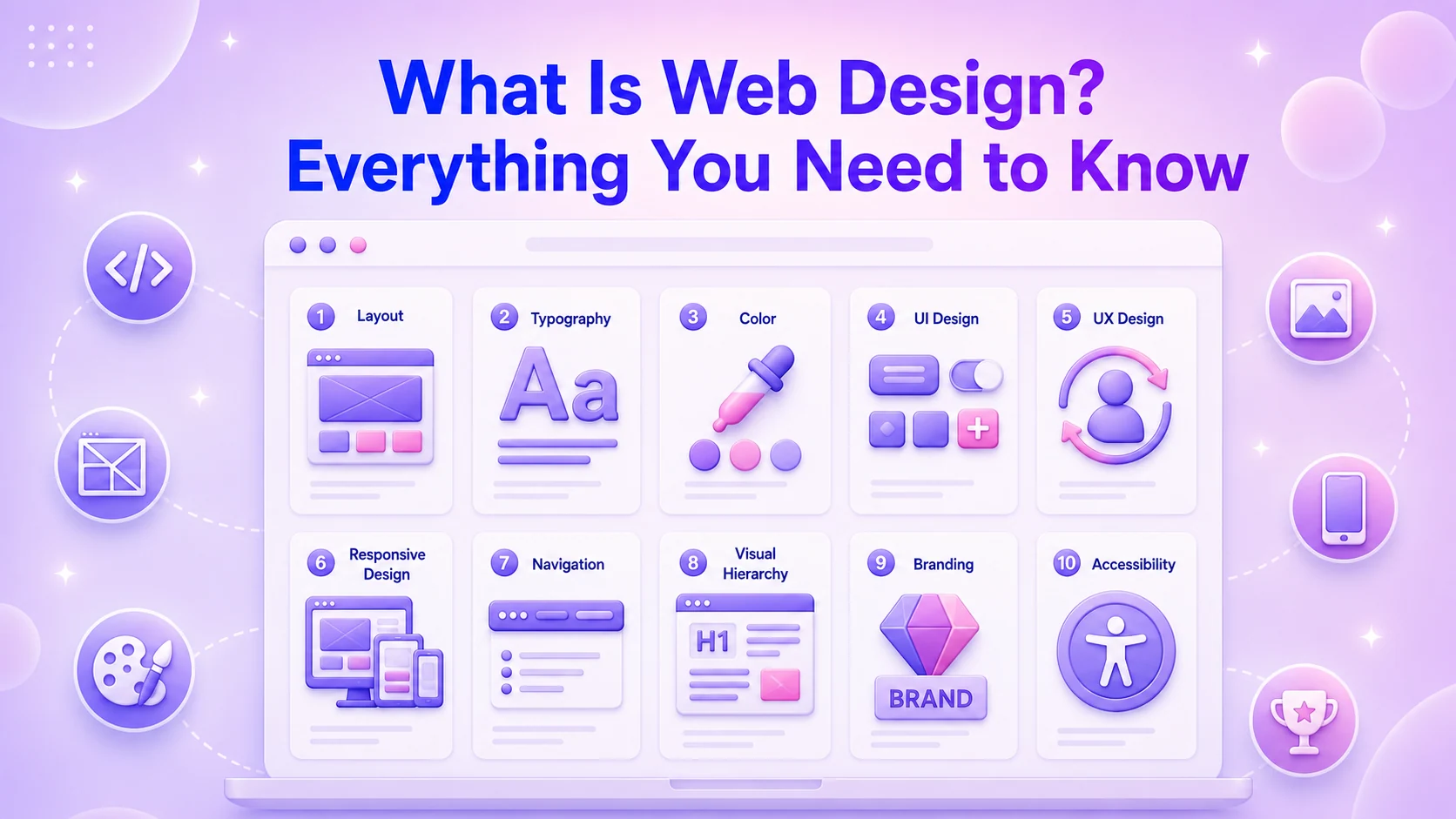
Web design is the process of planning and creating how a website looks and works for its visitors. It includes the layout, colors, typography, images, navigation, buttons, spacing, mobile responsiveness, accessibility, and overall user experience.
Good web design does more than make a website attractive. It helps people understand the content, find what they need, and move through each page without confusion.
In this guide, we will explain the main elements of web design, why they matter, how the design process works, and how you can start designing websites with WordPress.
What Is Web Design?
Web design is the process of planning and organizing a website so people can understand it, use it easily, and trust what they see.
It is not just about making a website look attractive. A page may use trendy colors, large images, and smooth animations. But if visitors struggle to read the content, find important information, or click the right button, the design is not doing its job.
Even a simple homepage requires many design decisions:
This is what web design looks like in practice. It combines visual choices, clear structure, and an understanding of how people use a website.
Web Design vs. Web Development
Web design and web development work closely together, but they focus on different parts of a website.
Web design focuses on what visitors see and how they interact with the site. It covers the layout, colors, fonts, spacing, navigation, buttons, and the way each page guides visitors.
Web development focuses on how the website works behind the scenes. Developers work with code, databases, servers, integrations, and custom features to make sure everything functions properly.
Today, modern website tools make the line between design and development less clear. For example, WordPress lets you build pages with blocks, adjust spacing for different screen sizes, add forms, and publish content without writing code.
However, you may still need a developer for advanced customization, performance improvements, complex integrations, or custom functionality.
For beginners, you don’t need to worry too much about whether you are a designer or a developer. A better question is: Can visitors land on your page, understand what it offers, and know what to do next?
The Main Parts of Web Design
Web design can feel complicated because it combines several different skills. As a beginner, you don’t need to master everything at once. Start by understanding these key areas.
Layout
Layout is the way you arrange content on a page.
It controls where you place headlines, images, text, buttons, and other sections. It also determines how much space each part gets.
For example, a service page might start with a hero section, followed by benefits, services, testimonials, FAQs, and a contact section. A portfolio website might show featured work first, then project details and a short introduction about the creator.
A good layout helps visitors scan the page and find information quickly. A poor layout makes the page harder to follow.
Visual Hierarchy
Visual hierarchy helps visitors understand what they should notice first.
Your main headline should stand out more than the paragraph below it. Your call-to-action button should be easy to find. Supporting details should stay visible without competing with the main message.
This is one of the easiest areas to improve when you are new to web design.
If every element uses a large font, bold text, bright colors, and centered alignment, nothing stands out. A clear visual hierarchy gives each element a purpose and guides visitors through the page.
Typography
Typography is the way text looks and feels on your website. It includes font choice, font size, weight, line height, spacing, and contrast.
Different fonts can make a website feel modern, elegant, friendly, playful, or professional. However, readability should always come first.
Visitors should be able to read your content without zooming in, squinting, or rereading the same sentence.
If you want to learn more, read our guide on How Typography Actually Shapes Your Website Conversions.
Color
Color helps create the mood and visual identity of your website. It also has several practical uses.
You can use color to separate sections, highlight buttons, show links, and improve text readability.
As a beginner, you can start with a simple color system:
You don’t need many colors to create a good-looking website. In many cases, using fewer colors makes the design feel cleaner and more consistent.
UX and UI
UX stands for user experience. It focuses on how easy and comfortable the website feels to use.
For example:
UI stands for user interface. It covers the visual and interactive elements that people use on the website.
Buttons, menus, forms, cards, tabs, icons, and input fields are all examples of UI elements.
Good UI supports good UX. Visitors should immediately understand what they can click, where they can go, and what they should do next.
Responsive Design
Responsive web design helps your website work well across different screen sizes, including desktops, tablets, and smartphones.
A layout that works on a large screen may not work well on a phone. That is why you need to adjust the design for smaller devices.
For example, a three-column section may look great on desktop, but those columns usually need to stack vertically on mobile. Large headings may need smaller font sizes, and wide sections may need less spacing.
If you use Gutenverse, the How to Apply Responsive Styling documentation explains how to adjust supported block settings for desktop, tablet, and mobile.
Accessibility
Accessibility means designing your website so more people can use it, including people with different abilities, devices, and browsing needs.
You can start with a few simple practices:
Accessibility should not be something you add after finishing the design. Include it from the beginning as part of creating a website that is easier for everyone to use.
What Makes a Website Design Good?
A good website design supports the main purpose of the website.
For a small business, this may mean helping visitors understand the service, see customer proof, and book a consultation. For a blog, it may mean making articles easy to read and helping people discover related posts. For a portfolio, it may mean putting the work first and making the contact button easy to find.
Most well-designed websites share a few important qualities:
That last point is especially important.
A law firm website should look professional and trustworthy. A children’s education website may use a more playful and friendly style. A financial website may need a cleaner and more structured look.
Good web design should match the people who will use the website and the purpose it needs to serve.
Why WordPress Is a Good Place to Learn Web Design
WordPress is a good place to learn web design because you can practice by building real pages with real content.
The WordPress Block Editor uses blocks for elements such as paragraphs, images, headings, lists, videos, galleries, and buttons. This block-based approach makes web design easier to learn because you can build a page one section at a time.
Instead of thinking, “I need to design an entire website,” you can break the page into smaller parts:
This makes the design process feel much more manageable.
WordPress also provides beginner learning resources that cover block themes, the Site Editor, layout, media, style guides, and accessibility. These tools help you understand both how a website looks and how its structure works.
If you want to learn web design with WordPress, Gutenberg and the Site Editor give you a practical way to start building while you learn.
How Gutenverse Helps You Design with WordPress
The default WordPress Block Editor gives you a solid starting point for creating blog posts and simple pages. However, you may need more design options when building a homepage, landing page, portfolio, agency website, or business website.
Gutenverse gives you more tools while keeping you inside the native WordPress editing experience.
It adds 45+ free blocks and 600+ template sections to the Block Editor and Site Editor. You can use them to create more flexible layouts, customize different parts of your pages, and build complete website sections without switching to a separate page builder.
Gutenverse can also help beginners understand web design more easily. Instead of always starting from a blank page, you can use ready-made templates as examples.
When you import a section from the Gutenverse Template Library, you can study how the layout is structured, how the typography creates hierarchy, how spacing separates content, and where buttons and images are placed.
You can then adjust each element to match your own content, style, and website goals. This gives you a practical way to learn web design while building real WordPress pages.
A Simple Web Design Learning Path for WordPress Beginners
You don’t need to learn everything about web design at once. Start with the basics and improve your skills step by step.
1. Learn How Blocks Work
WordPress uses blocks for things like headings, images, buttons, and columns.
Start by adding a few blocks, moving them around, and changing their basic settings. This helps you understand how WordPress pages are built.
2. Rebuild One Small Section
Choose one section from a website you like, such as a hero section, feature grid, testimonial section, or contact section. Then try to rebuild its structure with WordPress blocks.
Don’t copy the brand, text, or images. Focus on how the section is designed.
Ask yourself:
This type of practice helps you understand web design decisions instead of only following tutorials.
3. Use Templates as Examples
Import a Gutenverse layout or section and explore how it is built.
Look at the blocks, spacing, typography, colors, buttons, and images. Then change one element at a time.
For example, you can adjust the headline size, background color, button style, spacing, or image.
Starting with a template can feel easier than designing from a blank page. It also gives you a working layout that you can learn from and customize.
4. Keep Your Colors and Fonts Consistent
Choose a small set of colors and fonts before styling your page. For example, use one main color for buttons, one color for headings, and the same font styles across every section.
This keeps your website consistent and makes it easier to design new sections.
With Gutenverse Global Styles, you can save these colors and typography settings and reuse them across supported blocks. See How To Use Global Styles to learn how.
5. Check Mobile Before Publishing
Don’t design your website for desktop screens only.
Preview every page on desktop, tablet, and mobile before you publish it. Check your headings, buttons, images, columns, spacing, and forms.
If something looks crowded or difficult to use, adjust the responsive settings.
Small changes on mobile can make the whole website feel more polished and easier to use.
6. Build One Real Page
Once you feel comfortable with the basics, build a complete page.
You can start with a homepage, but a service page, portfolio page, or landing page may feel easier because it usually has a more focused goal.
For example, you can use this simple structure:
Keep your first page simple. You don’t need to use every animation, effect, or design feature available. Focus on creating a page that looks clear, works well, and helps visitors understand what to do next.
Common Beginner Web Design Mistakes
Beginners often make similar mistakes when they start designing websites. The good news is that most of them are easy to fix once you know what to look for.
Using Too Many Fonts
Try to use only one or two fonts across your website.
You can create enough variety by changing the font size, weight, and spacing. Using too many fonts can make the design feel inconsistent and harder to read.
Making Everything Stand Out
Not every element needs to grab attention.
If every section uses large text, bright colors, bold buttons, and strong visuals, visitors may not know where to look first.
Choose one main message or action for each section, then let the supporting content stay more subtle.
Forgetting Mobile Layouts
A layout that looks good on desktop may not work well on a smaller screen.
Always preview your pages on tablet and mobile before publishing. Pay extra attention to columns, large headings, images, buttons, and spacing.
Using Too Much Animation
Animation can make a website feel more interactive, but too much movement can distract visitors.
Use animation with a clear purpose. It should help guide attention or explain an interaction, not simply add movement to every section.
Designing Without a Clear Goal
Before choosing colors, layouts, or templates, decide what you want the page to achieve.
A contact page should make it easy to get in touch. A pricing page should help visitors compare options. A portfolio should highlight your best work.
When you understand the goal first, you can make better design decisions for the entire page.
FAQ
Web design is the process of deciding how a website looks, works, and feels to visitors. It includes the layout, colors, fonts, images, navigation, buttons, mobile experience, and overall usability.
No. You can start learning web design without coding. Tools like WordPress, Gutenberg, or Gutenverse let you build and design pages visually. You can learn coding later if you want more control or advanced customization.
Yes. WordPress is a good place to learn because you can design real pages, work with themes and templates, publish content, and see how a real website works after launch.
Start with the basics, including layout, visual hierarchy, typography, color, user experience, responsive design, and accessibility. Then practice by building small sections before moving on to a complete website.
Gutenverse adds more blocks, templates, and styling options to the WordPress Block Editor. Beginners can import a template, study how it is built, customize each section, and learn web design by working on real pages.
Final Thoughts
Web design becomes easier when you break it into smaller decisions instead of trying to learn everything at once.
Start with one section. Improve the headline. Adjust the spacing. Choose a readable font. Check how it looks on mobile. Replace images that don’t fit. Move buttons to places where visitors can find them easily.
Each small improvement helps you understand web design better.
If you want to practice web design with WordPress, Gutenverse gives you an easy way to start inside the Block Editor and Site Editor. You can explore Gutenverse blocks, import ready-made templates, manage global styles, and build complete pages while staying in the WordPress workflow.
The best way to improve is to keep building, testing, and refining your designs as you go.